Future of AI 2025 Conference Day 2: Navigating Ethics, Governance, and Enterprise Innovation
- Nov 5, 2025
- 3 min read
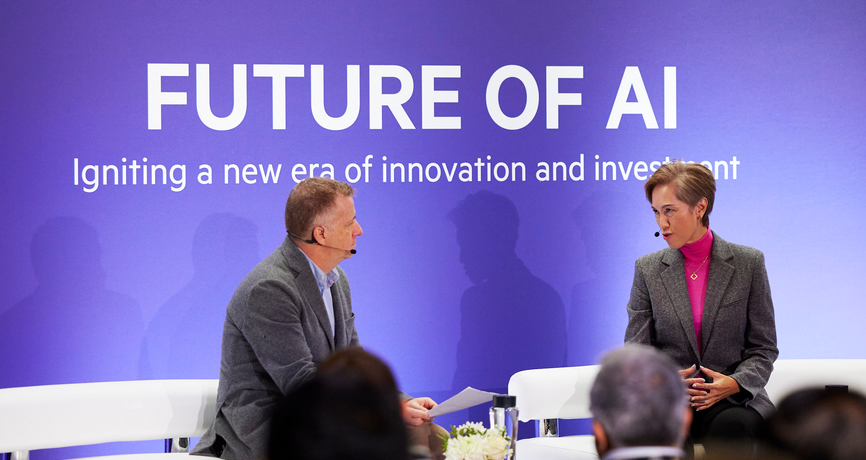
The second day of the Future of AI 2025 conference, hosted by Financial Times Live, builds on Day 1's foundations by delving into advanced topics like AI ethics, governance, and enterprise deployment. Held at etc venues County Hall in London, the event features keynotes from prominent figures, including Nvidia's Jensen Huang and Stanford's Fei-Fei Li, focusing on real-world AI applications and regulatory challenges. Eric Vaughan, CEO of IgniteTech, will discuss AI-driven innovation in a keynote interview.
Potential Impacts on #Business and #Innovation
Sessions on Day 2 are expected to explore how AI can enhance business models, with an emphasis on governance to ensure ethical deployment and mitigate risks such as bias and data privacy issues. The discussions aim to provide strategies for enterprises to integrate AI while navigating global regulations.

Debates on AI Regulation and Ethics
Amid ongoing global debates, Day 2 panels will likely address the balance between innovation and regulation, with insights on accountability and sustainable AI practices. Critics and supporters alike highlight the need for frameworks that prevent harm while fostering growth.

The Future of AI 2025 conference, organized by Financial Times Live, enters its second day on November 6, 2025, at etc.venues County Hall in London, continuing to explore AI's transformative potential in business, ethics, and innovation. This hybrid event, combining in-person attendance with digital access, is designed for strategy, technology, IT, and data leaders seeking to harness AI for growth and productivity enhancement. Amid heightened global discussions on AI regulation, Day 2 shifts focus to practical applications, governance, and ethical considerations, featuring keynotes from industry pioneers.
Building on Day 1's foundational topics, Day 2 emphasizes AI's role in enterprise settings, including governance frameworks and innovative business models. The agenda includes expertly crafted panels and high-level keynotes that address investment challenges, alignment with business goals, and emerging trends such as ethical AI deployment. Notable sessions feature 2025 Queen Elizabeth Prize for Engineering Laureates, with Jensen Huang, Founder, President, and CEO of Nvidia, and Fei-Fei Li, Inaugural Sequoia Professor at Stanford University, sharing insights on AI's future. Eric Vaughan, CEO of IgniteTech, Khoros, and GFI Software, will discuss how AI accelerates product innovation and human capabilities in a keynote interview.
Date | Event | Description | Key Participants |
October 2025 | Pre-event Promotion | FT Live announces the summit via social media, highlighting themes of innovation and investment. | Financial Times team |
November 5, 2025 | Day 1: Foundations | Sessions on AI basics, investment challenges, and initial keynotes. | Various speakers including prize laureates |
November 6, 2025 | Day 2: Advanced Topics | Focus on ethics, governance, enterprise AI, and regulation debates. | Jensen Huang, Fei-Fei Li, Eric Vaughan |
Post-event | Digital Access | Recordings and insights available for virtual attendees. | Global audience |
Debates over U.S. and global tech dominance feature prominently, with discussions of whether aggressive AI advancement outpaces governance, potentially leading to risks such as military misuse or job displacement. Social media reactions underscore the need for ethical frameworks, with users calling for transparency in AI decisions and culturally sensitive norms. Proponents argue for human-AI collaboration to maintain adaptability, while critics warn of ethics "theater" without real accountability.
Aspect | Pros (Advancing Innovation) | Cons (Ethical Risks) |
Governance Frameworks | Enables scalable, compliant AI deployment, enhancing trust and market access. | May slow innovation if overly restrictive, leading to fragmented global standards. |
Ethical AI in Business | Reduces bias and promotes fair practices, boosting productivity ethically. | Accountability gaps could result in harm from errors or misuse, like hallucinations in critical applications. |
Enterprise Applications | Drives growth through AI agents and data optimization. | Raises IP concerns and potential for data leaks, exacerbating privacy issues. |
Regulation Debates | Fosters international collaboration for sustainable AI. | Risks creating "moral loops" without verifiable safety measures. |
On platforms like X, conversations reflect broader concerns, with posts advocating for robust IAM in AI systems and ethical audits of tech policies. One user emphasized shifting from content delivery to human-AI collaboration in education, mirroring conference themes.